AI Data Centers in Homes — Should Your Small Business Care?
NVIDIA and Span want to put AI compute nodes in customer homes. Here's what that actually means for a salon, dental office, or plumbing shop in South Florida.
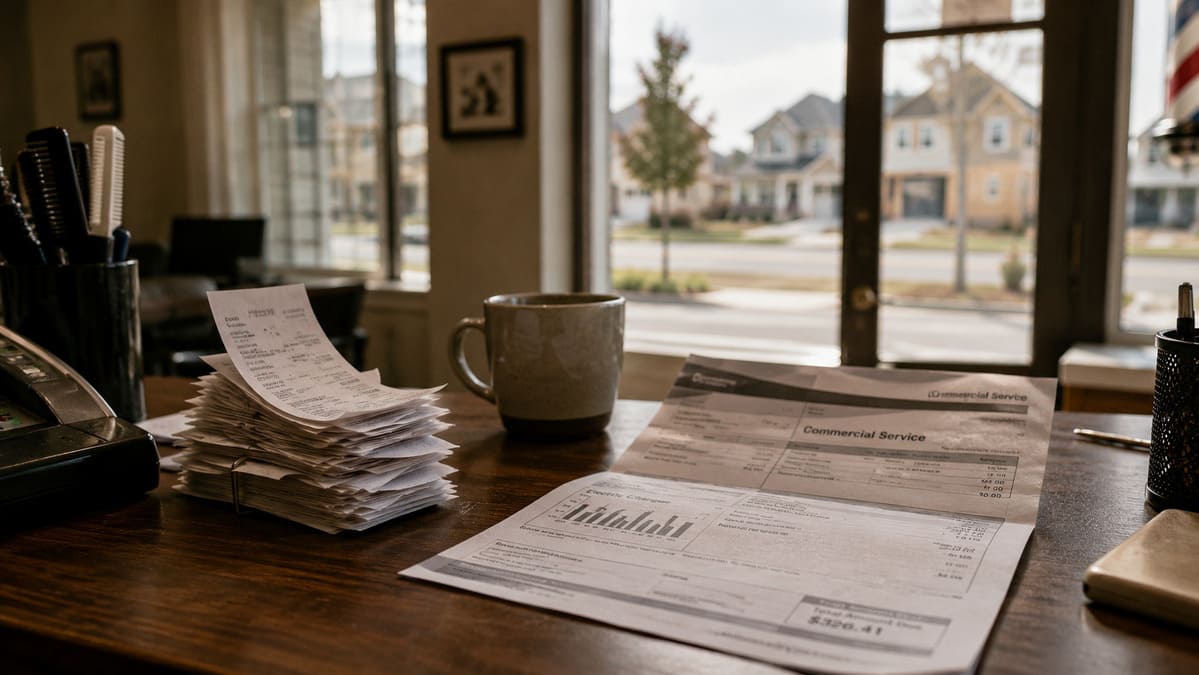
NVIDIA Wants to Put a Mini Data Center in Your Customer's Garage. Should You Care?
Here's a story that ran a few weeks ago that probably didn't make it onto your radar, because it sounds like tech news for tech people.
It's not. Stay with me.
A company called Span — they make smart electrical panels for houses — announced a deal with NVIDIA and a big homebuilder named PulteGroup. The plan: install little compute units in new houses. About the size of a small fridge, on the side of the home. The unit runs AI workloads for big tech companies. In exchange, the homeowner gets free or discounted electricity and free internet.
That's the elevator pitch. They're building proof-of-concept this summer in Nevada or Arizona, and trying to scale it nationally starting 2027.
So why does this matter for a salon owner in Doral, or a plumber in Coral Gables, or a dental office in Aventura?
Because it's a signal about where the AI economy is going next — and a few things are going to land on small businesses' doorsteps as a result.
The Big Picture, in One Paragraph
Big tech companies need a lot of electricity to run AI. Building new data centers takes seven years to get connected to the grid. That's too slow. So they're looking for clever ways to use electricity that's already flowing — including the spare capacity in regular houses. Span and NVIDIA's project is one version of this. There will be others.
That's the whole story. Now let's get to what it means for you.
What This Does Not Mean for Your Business
Let me cut through some likely panic first.
Your electricity bill is not about to spike because of this. Not directly. The companies running these compute nodes pay for the electricity they use. The homeowner gets a discount, and your business is unaffected for now.
You're not getting an AI compute box in your shop. This program is residential-only at launch. New construction homes specifically.
You don't need to do anything this week. The thing is real, but it's also small. 100 homes in proof-of-concept. By 2027 they're trying to hit a much bigger number, but you've got time.
So if that's all you needed to know — close this tab and go finish your day.
If you're still here, here's the part that actually matters.
Three Things to Watch in the Next 12-24 Months
1. Your commercial electricity rates
This is the big one.
Here's a quirk of how electricity gets priced: utilities have a fixed amount of grid capacity. The more electricity they sell, the more they can spread their costs over. So in theory, adding new compute load to homes could lower rates for everyone, including your commercial account.
That's the optimistic version that Span and NVIDIA are selling.
The pessimistic version: if these compute nodes scale up faster than the grid can grow, your local utility might run into capacity constraints. When that happens, commercial customers (you) usually get rate hikes before residential customers (homeowners) do, because residential rates are politically protected and commercial rates aren't.
What to do: Nothing right now. But when you renew your commercial electricity contract over the next 1-2 years, pay attention to rate-escalator clauses and avoid signing anything with open-ended pass-through provisions tied to "grid capacity charges." Ask your provider directly: "What's your exposure to data-center load growth in our area?" If they look confused, that's information too.
2. Your commercial lease
If you rent your storefront, your lease probably has language about electricity usage, HVAC, and "common area maintenance." Over the next few years, expect landlords to start updating these clauses as data center load growth pressures commercial real estate utility budgets.
What to do: Next time your lease renews, read the utility and CAM sections carefully. Specifically:
- Who eats utility rate increases — you, or the landlord?
- Is there a cap on annual utility pass-throughs?
- Are there clauses about "future infrastructure upgrades" that you might be on the hook for?
Most South Florida commercial leases were written before AI infrastructure became a thing. The renewal cycle is when this gets renegotiated.
3. Where AI-powered services are going to land in your industry
Here's the part most small business owners aren't thinking about yet.
The reason NVIDIA and Span are doing this is because AI workloads are about to be everywhere. Not just chatbots — but real-time scheduling AIs, voice agents that answer your phone when you're busy, automated booking systems, smart cameras, predictive inventory.
The companies that build those tools need somewhere cheap to run them. That's the whole reason for projects like XFRA.
Translation: AI tools for small businesses are about to get cheaper and faster.
A voice agent that answers your phone after-hours costs maybe $100-200/month today. By 2027, when distributed compute like this is online at scale, that price drops. Same for smart-scheduling, customer reactivation, review-response automation, and a dozen other things you've maybe been quoted on and walked away from because the math didn't work yet.
What to do: Keep a short list of "AI tools I'd buy if they were half the price." Pull it out every six months. The math is going to change.
The Honest Take
This whole story is one of those things that's small now and either huge or irrelevant later, and nobody can tell you which.
If it works, the AI infrastructure economy gets way more distributed and way cheaper, which mostly benefits small businesses indirectly through lower prices on the AI tools you'll eventually use.
If it doesn't work — if the grid pushes back, if homeowners get tired of having a noisy compute fridge on their wall, if the economics don't pencil out in expensive electricity states — then it quietly disappears and the conversation moves to the next idea.
Either way, your job today is the same:
- Run your business.
- Don't sign long-term commercial electricity contracts without reading the fine print.
- Keep an eye on AI tools that might genuinely save you hours or recover lost revenue, because they're getting cheaper faster than most people realize.
One Last Thing
We get asked variations of this question a lot:
"Is this AI thing going to matter for my [salon / dental practice / plumbing shop / restaurant], or is it hype?"
The answer is almost always: the underlying technology is real, but the specific product getting hyped this week probably isn't the one that'll matter for you.
What matters for you is what eventually shows up on your doorstep:
- The customer who books an appointment at 11pm because some AI tool kept the booking widget online
- The competitor up the street who picks up calls you miss because their AI receptionist works at 6am
- The electricity bill on your commercial space, going up because none of this got built thoughtfully
You don't need to follow the tech press to deal with any of that. You just need someone who watches it for you and tells you what's worth your time.
That's what we do.
Got questions about how this affects your specific business? We're a South Florida AI services shop. We don't sell you the hype. We tell you what's worth doing this quarter and what's safe to ignore. Drop us a line.